
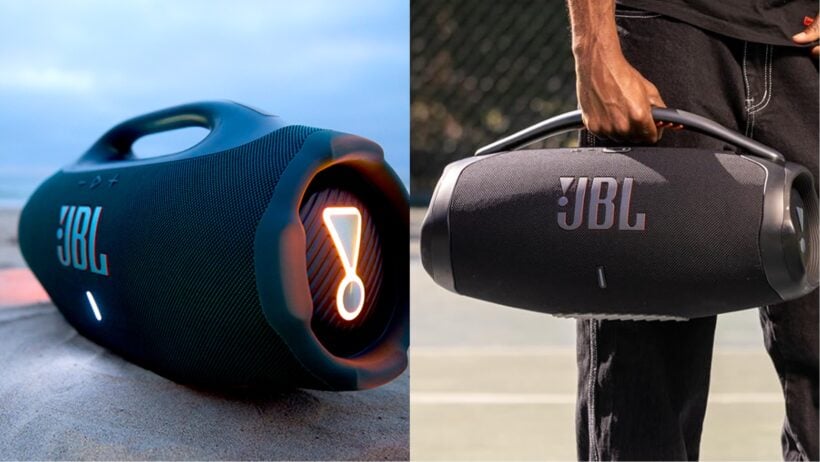
The Boombox 4 is the latest iteration of JBL’s large-format portable speaker, and compared to Boombox 3 it comes with a few upgraded specs — power output, battery capacity, portability, and weight. While the JBL Boombox 3 is already a heavy-duty speaker for outdoor parties and bass-heavy playback, the Boombox 4 pushes further: it delivers more volume and deeper bass, lasts longer per charge, weighs less despite being larger in dimension, and adds modern connectivity and audio enhancements. In short, the JBL Boombox 4 builds on the legacy of the Boombox 3 by refining and extending what made the original great — though the changes also involve trade-offs, especially in how the drivers are configured and how the sound character changes.
Specs Comparison
Both the JBL Boombox 3 and Boombox 4 share a similar “portable party” concept but the newer model is clearly tuned for more power and endurance. The Boombox 3 uses a three-way driver layout with a dedicated subwoofer, separate mid-range drivers and tweeters. This gives it a strong low end and a relatively balanced mid band. Power output is high but more conservative than the newer model, especially on battery. The Boombox 4 switches to two 5-inch woofers and two 0.75-inch tweeters with three passive radiators, and pushes higher total RMS output in both AC and battery mode. The quoted frequency response drops a few hertz lower, so bass reach is deeper on paper – battery capacity also increases, with longer claimed playtime and faster charging. The Boombox 4 usually has newer Bluetooth hardware, Auracast support and USB-C audio and power, while Boombox 3 relies on an older Bluetooth revision and a more traditional connection set. Overall Boombox 3 is a powerful large portable speaker, while Boombox 4 is a higher output, longer running and more modern update to the speaker design that is optimised to deliver maximum bass and volume.
Table Comparison
| Specification / Feature | JBL Boombox 3 | JBL Boombox 4 |
|---|---|---|
| RMS Power Output (AC) | ~ 180 W (total) | ~ 210 W (total) |
| RMS Power Output (Battery) | ~ 136 W | ~ 200 W |
| Drivers (Woofers) | Subwoofer + mid-range woofers (3-way) | 2 × 5″ woofers |
| Tweeters | 2 × ~0.75″ tweeters | 2 × 0.75″ tweeters |
| Passive Radiators | 2 side radiators | 3 radiators (2 side + 1 racetrack) |
| Frequency Response | ~ 40 Hz – 20 kHz | ~ 37 Hz – 20 kHz |
| Battery Capacity | ~ 72.6 Wh | 99.02 Wh |
| Battery Life (Typical) | ~ 24 hours | ~ 28 hours (up to ~34 with boost) |
| Recharge Time | ~ 6.5 hours | ~ 3 hours |
| Weight | ~ 6.7 kg | ~ 5.9 kg |
| Water / Dust Rating | IP67 | IP68 |
| Connectivity | Bluetooth, PartyBoost, 3.5 mm input | Bluetooth 5.4, Auracast, USB-C lossless audio, powerbank |
The main difference here is that the Boombox 4 delivers higher power, deeper bass and longer battery life in a lighter, more modern design compared to the Boombox 3, although the design and water-resistance remains the largely the same. The Boombox 4 is surprisingly lighter than the Boombox 3 which makes it slightly more portable and is a welcome upgrade.
Sound Comparison
The first time I played “Blinding Lights” by The Weeknd on Boombox 3 I felt the bass thump carry across the room and the mids held ground finely. The low-end had a physical presence — good for parties or when I wanted that immersive bass-heavy feel. On songs like “Sunflower” by Post Malone & Swae Lee the vocals came through clean enough and the beat hit hard. The overall profile was warm and tuned for punch.
Switching to Boombox 4 and playing the same tracks, I noticed deeper bass extension from the Boombox 4 — on “Blinding Lights” the bass reached a little lower, giving the song more body. The sound felt fuller and more powerful. At higher volume the bass carried without feeling muddy. On “Sunflower” the vocals remained clear while the beat got more punchy. There was a sense of greater dynamic range too, like the speakers could handle spikes without struggling.
That said when I pushed volume to extremes, Boombox 4 sometimes compressed mids a little — tracks like “Birds of a Feather” by Billie Eilish sounded slightly less airy compared to Boombox 3 on moderate levels. But overall for bass-heavy playlists and outdoor sessions the Boombox 4 delivered a more impactful and lively experience. In comparison Boombox 3 felt more balanced in mid-bass and mids but lacked the extra “oomph” in deep bass that the newer model offered.
I would say that the Boombox 4 delivers a deeper, fuller low end, pushes louder with more headroom, and feels more powerful for bass-driven music or party settings, whereas Boombox 3 has a tighter mid-bass and slightly more balanced midrange that can feel more natural and clean at moderate volumes. The 4 brings more “body” and punch — songs with deep bass or heavy beats hit harder and resonate more. Meanwhile the Boombox 3 seems to preserve midrange clarity and nuance a bit better when I keep volume in check, which can matter for vocals or detail-rich tracks.
Design Comparison
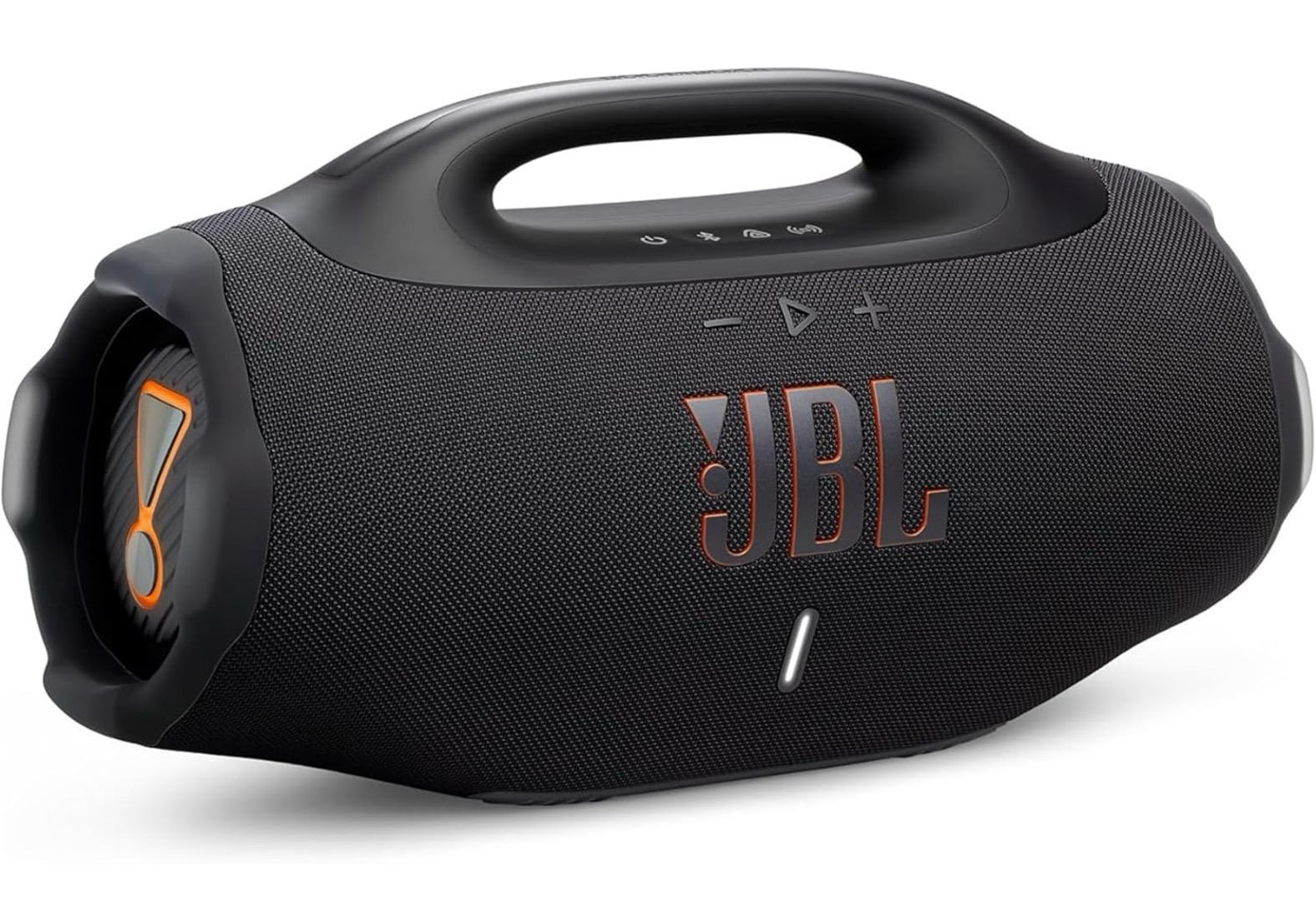
From a design perspective the JBL Boombox 3 has a more traditional boombox look and a heavier, tank-like presence. The metal handle, the weight and the thick housing give it a very robust feel. It is built to tolerate outdoor use with a high water and dust rating and a rugged exterior. The Boombox 4 keeps the same general silhouette but optimizes for portability and modern usability. It is slightly larger in footprint yet noticeably lighter, with refinements to the handle and body that make it easier to carry over longer distances. The protection rating is raised to a higher IP level which improves resistance to dust and water for beach or poolside use. The passive radiators and housing are reshaped for better airflow and bass movement, and the port layout shifts to USB-C for both charging and wired audio. In short Boombox 3 feels like a classic heavy-duty portable, while Boombox 4 takes that shell and updates it with lighter construction, better sealing and a more practical port setup.
The Verdict?
Personally, I would go with the JBL Boombox 4 for as it is slightly lighter than the Boombox 3 and delivers more volume. It delivers higher power output, deeper rated bass and longer battery life, yet manages to cut weight compared with Boombox 3. This makes it ideal for taking it with you to a park, beach or barbecue. The upgraded Bluetooth stack, Auracast support and USB-C audio give it a more future-proof connection panel. The improved water and dust rating adds peace of mind for outdoor use. On the sound side Boombox 4 has more headroom and low-end authority, so modern pop, hip-hop and EDM feel more alive at higher volumes. It is built to be a party speaker that can go loud and stay loud for a long session without feeling underpowered.
I think that JBL Boombox 3 still has a valid place for listeners who prefer a slightly more relaxed tuning and do not need the extra output or the newest connectivity. The Boombox 3 has a three-way driver architecture can sound a bit more natural in the mid range at modest volumes, and if it is available at a lower price it may be the better value choice for home-only listening.
If you already have the Boombox 3, the Boombox 4 doesn’t deliver anything exceptional that is worth the upgrade (unless you want to blast your speaker at full volume and take advantage of the 200 RMS output power). Other than the volume output, it retains the same design and functionality and are both great outdoor speakers that are waterproof.
However, if you’re choosing between the JBL Boombox 3 and the Boombox 4, the Boombox 4 feels like the more complete and versatile choice because it hits harder on battery power, lasts longer, charges faster, weighs less, has better protection and comes with all the updated digital connections. If you want a powerful Bluetooth speaker that’s built for long-term use with modern specs, the JBL Boombox 4 is easily the better pick.